Indigenous Ichnology – Tracking Connections Between Dinosaur Footprints and Indigenous Petroglyphs
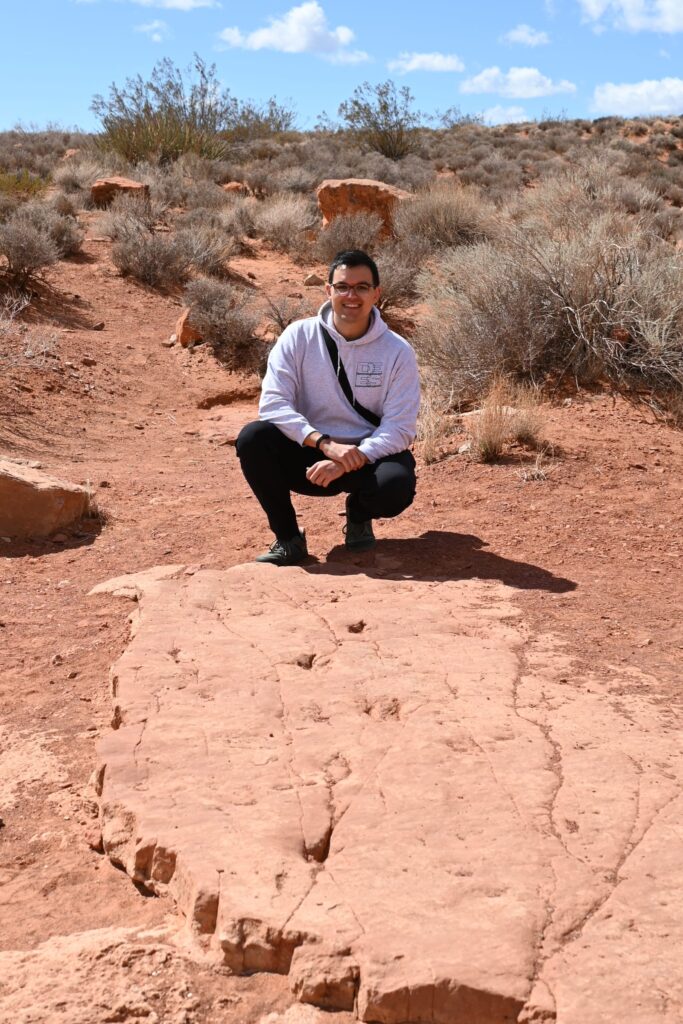
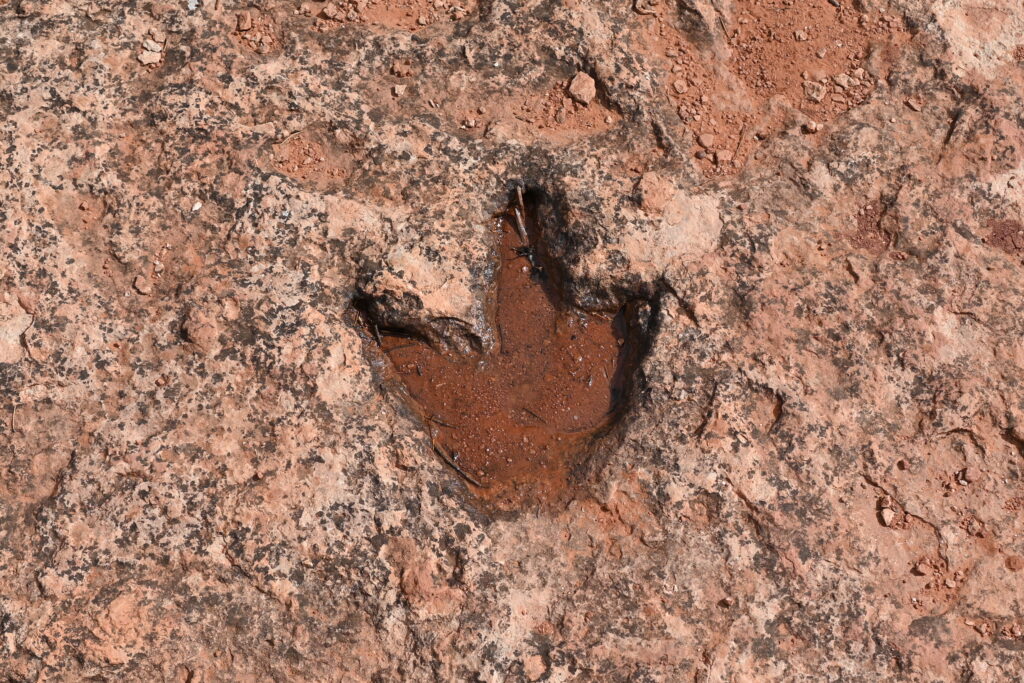
200 million years ago, land that would become the Colorado plateau sat on the shores of a freshwater lake that covered hundreds of miles. Along these sandy shores, large theropod dinosaurs left traces of their movement in the mud, preserving some of the finest dinosaur footprints in the western United States.
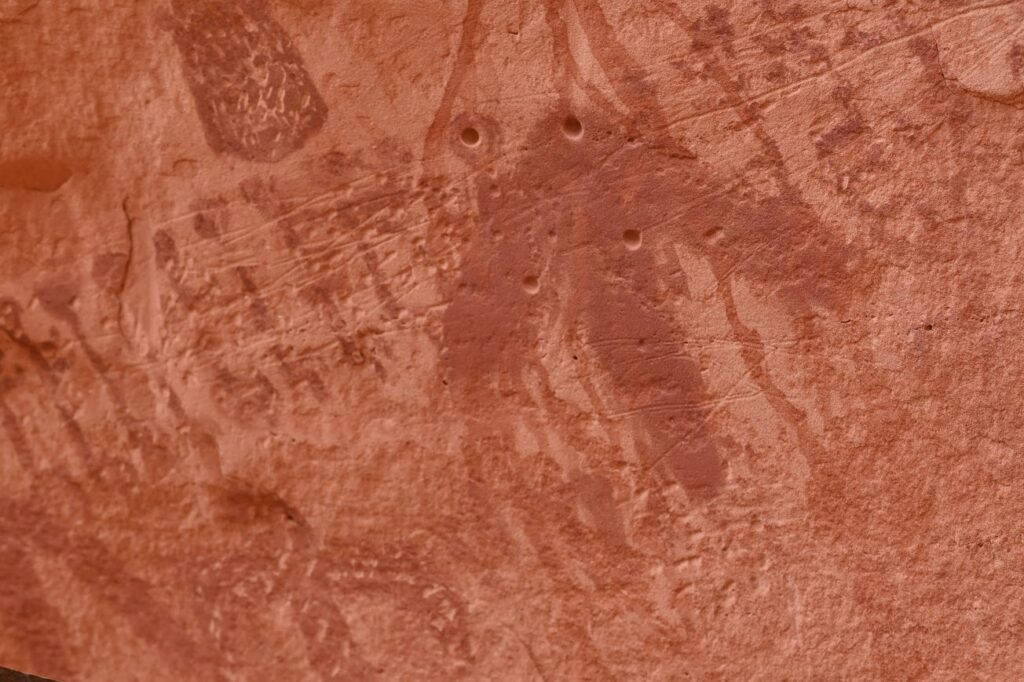
These tracks, and those like them in the northeastern US, have been studied by American paleontologists for nearly 200 years. But the presence of footprint shaped pictographs made by the ancestral peoples of the American Southwest suggests this history of study may extend back much further.
Funded by an Explorer’s Club Exodus Grant, I traveled to the Colorado Plateau to understand whether the purported track representations were more analogous to modern birds, or if they truly did represent America’s earliest paleontologists. Working with a diverse team of archaeologists, paleontologists and tribal elders, we’ve found multiple locations where unambiguous dinosaur track pictographs are associated with nearby large dinosaur footprints.